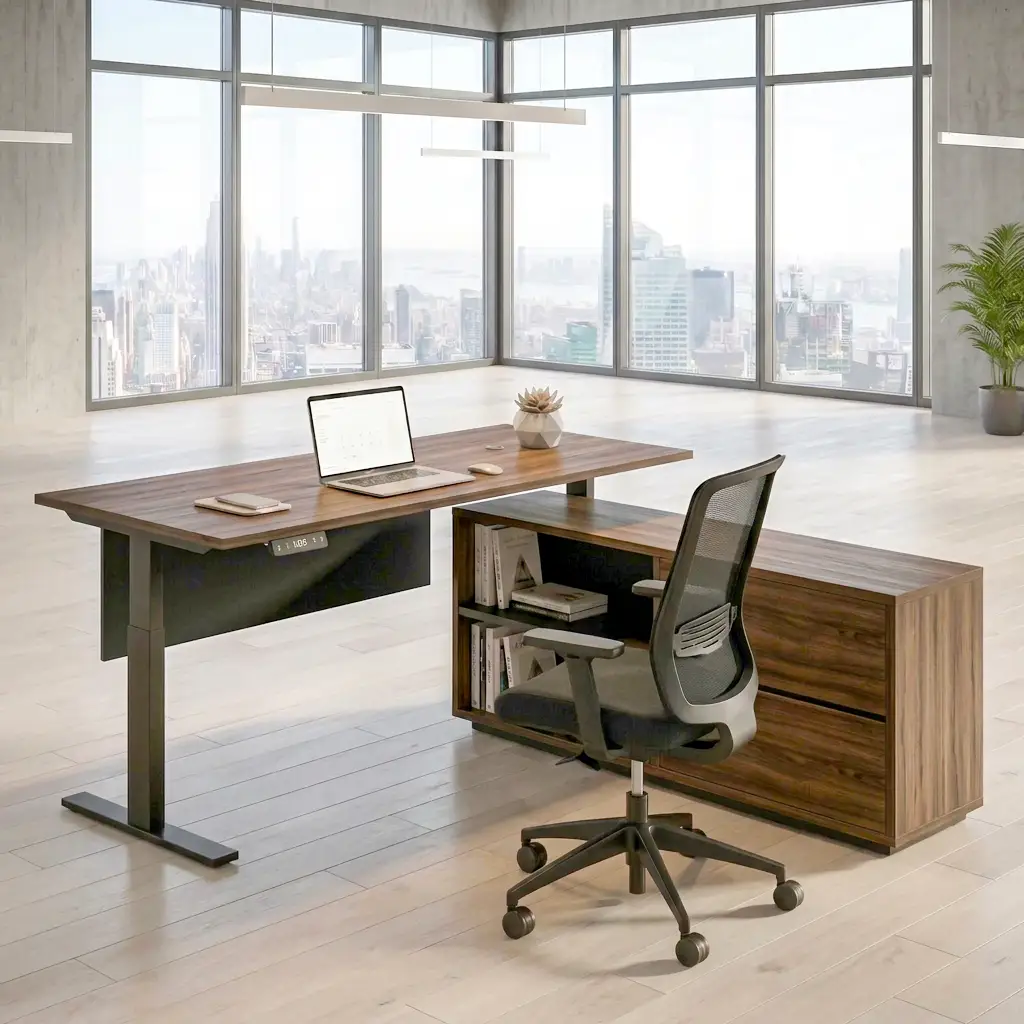
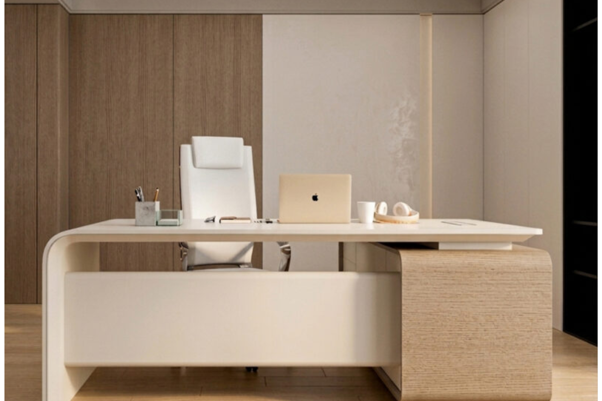
A meeting table can look flawless on installation day and still become one of the first pieces of furniture to show its age. The difference often has little to do with the table’s shape or price. It comes down to what sits on top, what sits underneath it, how the edges are finished, and where the table is positioned in the room.
For businesses choosing an office meeting table in Dubai, veneer, laminate, and glass each create a very different combination of appearance, maintenance, and long-term performance. Dubai’s heat, humidity fluctuations, strong daylight, and intensive air conditioning make the construction behind the finish particularly important.
The right question, therefore, is not simply, “Which finish looks better?”
It is which finish continues to perform well under the way your meeting room is actually used?
Start With the Construction, Not Just the Finish
A finish sample tells you how a table looks. It does not tell you how the table will perform.
Two tables with similar-looking laminate, for example, can have very different durability depending on the board underneath and how the edges are sealed.
Before comparing finishes, look at:
- Surface: veneer, laminate, or glass
- Substrate: the board or material supporting the surface
- Edge treatment: protection against knocks and moisture exposure
- Construction: joints, supports, and tabletop thickness
- Room conditions: sunlight, air conditioning, and humidity
- Usage: meeting frequency, cleaning, and equipment placed on the table
Iconic Office Furniture’s Matrix Conference Table, for example, combines a German Egger board, a melamine-faced surface, and ABS lipping to create a surface designed for everyday office use. Our meeting-table range also includes customized dimensions, finishes, and cable-management options. These details matter because durability is determined by the complete construction rather than the decorative surface alone.
Wood Veneer: Best When Material Character Matters
Wood veneer uses a thin layer of natural timber over an engineered substrate. Its main advantage is visual rather than simply functional. Natural grain variation gives each office meeting table in Dubai a degree of character that manufactured decorative surfaces cannot reproduce exactly.
Veneer works particularly well in:
- Executive boardrooms
- Management meeting rooms
- Client-facing spaces
- Interiors with timber doors, wall panels, or cabinetry
- Offices where furniture forms part of the overall design language
What to consider in Dubai
Wood is responsive to moisture conditions. A veneer tabletop therefore needs appropriate sealing and a suitable substrate, particularly in an environment where outdoor heat and humidity contrast sharply with heavily air-conditioned interiors.
Direct sunlight deserves attention too. A table placed beside a large glazed facade may experience considerably different conditions from one positioned away from windows.
When specifying veneer, ask about:
- The substrate beneath the veneer
- Surface coating and protection
- Sealing of exposed surfaces and edges
- Recommended indoor conditions
- Cleaning and maintenance requirements
A well-constructed veneer table can provide a sophisticated long-term finish, but it should not be treated as maintenance-free.
Laminate: Practical for High-Use Meeting Rooms
Laminate takes a more performance-oriented approach. It provides a manufactured decorative surface with consistent appearance and practical resistance to everyday office activity.
That makes it particularly relevant for meeting rooms where laptops, documents, coffee cups, chargers, and presentation equipment are used throughout the day.
Laminate can be a strong choice for:
- High-use meeting rooms
- Training rooms
- Shared conference spaces
- Large offices requiring consistent finishes
- Spaces where straightforward cleaning is important
Pay attention to the edges
The tabletop’s perimeter is easy to overlook.
A damaged or poorly protected edge can expose the underlying board to moisture and impact. Proper edge treatment helps protect this vulnerable area while also reducing visible damage from chairs, bags, and everyday contact.
ABS lipping, such as that specified on Iconic’s Matrix Conference Table, is one example of how edge construction forms part of the overall specification.
The takeaway is simple: do not evaluate laminate only by its color, texture, or pattern.
Glass: A Different Performance Profile
Glass creates a visually lighter table. That can be useful in contemporary meeting rooms where a large opaque tabletop might make the space feel visually heavier.
It is also non-porous, which means it does not absorb moisture like wood-based materials.
The trade-off is visibility.
Fingerprints, dust, water spots, and smudges can stand out, especially on a table used throughout the day. It may therefore need more frequent wiping to stay presentable.
Sunlight and temperature exposure should also be considered, particularly when the table is positioned close to large windows. Safety-rated glass appropriate for furniture use should be specified rather than selecting glass purely for its appearance.
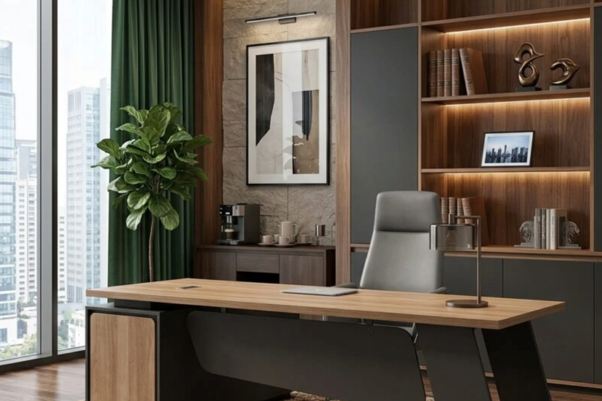
Veneer vs. Laminate vs. Glass
| Factor | Wood Veneer | Laminate | Glass |
|---|---|---|---|
| Appearance | Natural timber variation | Consistent decorative finish | Contemporary and visually light |
| Maintenance | Moderate | Generally straightforward | Frequent cleaning may be needed |
| Moisture | Requires proper sealing | Surface resistant, edges need protection | Non-porous |
| Fingerprints | Usually less noticeable | Usually less noticeable | Highly visible |
| Best suited to | Executive rooms | High-use spaces | Contemporary interiors |
| Main consideration | Coating and substrate | Surface grade and edge treatment | Safety, cleaning, and placement |
The Room Can Change the Right Choice
The same finish can behave differently depending on where the table is installed.
Before selecting a material, consider:
- Sun exposure: Is the table beside a large window?
- Air conditioning: Does a vent blow directly across the tabletop?
- Usage: Is the room used occasionally or several times a day?
- Food and drinks: Are refreshments regularly served?
- Cleaning: How frequently will the surface be wiped?
- Technology: Will laptops, screens, and power connections be used?
- Seating: Does the table need to accommodate a fixed number of users?
- Interior design: Does the finish need to coordinate with other furniture?
Meeting tables also need to accommodate practical requirements before manufacturing. Iconic Office Furniture offers different table configurations and customization options, including dimensions, finishes, and cable-management solutions.
A Better Way to Specify Your Meeting Table
Instead of asking, “Which finish lasts the longest?”, ask which construction suits the room’s actual workload.
For executive boardrooms
Wood veneer can provide the natural material variation and visual depth expected in a formal setting.
For high-use corporate rooms
Laminate offers a practical combination of consistent appearance and everyday usability.
For contemporary meeting spaces
Glass can reduce visual bulk and complement minimalist interiors, provided regular cleaning and appropriate safety specifications are considered.
The strongest specification considers the surface and everything supporting it. Substrate quality, edge protection, environmental exposure, cleaning requirements, and technology integration can have as much impact on long-term performance as the finish itself.
For businesses comparing an office meeting table in Dubai, this approach makes the selection more relevant than choosing purely from a finish sample. The table needs to work for the room, the people using it, and the conditions surrounding it.
Iconic Office Furniture helps businesses specify meeting tables around the room’s dimensions, finish requirements, and practical needs, rather than treating the tabletop as a standalone design choice. Connect today!